
For a phone repair shop or mobile accessory retailer, screen protector installation is far more than a minor add-on service. It serves as a high-margin opportunity to increase repair visit value, drive accessory upsells, and enhance customer loyalty. However, manual application often leads to inconsistent results—trapped dust, misalignment, and prolonged service times—especially during peak business hours. Implementing a desktop automatic screen protector applicator machine allows repair centers to standardize their workflow. Beyond evaluating advertised application speeds, shop owners and wholesale distributors must assess workspace footprints, phone model compatibility, supported film materials, routine maintenance, and factory support. This guide outlines how to select the right universal screen protector applicator machine for your retail or repair operations.
1. Choose a Machine Designed for Your Working Environment
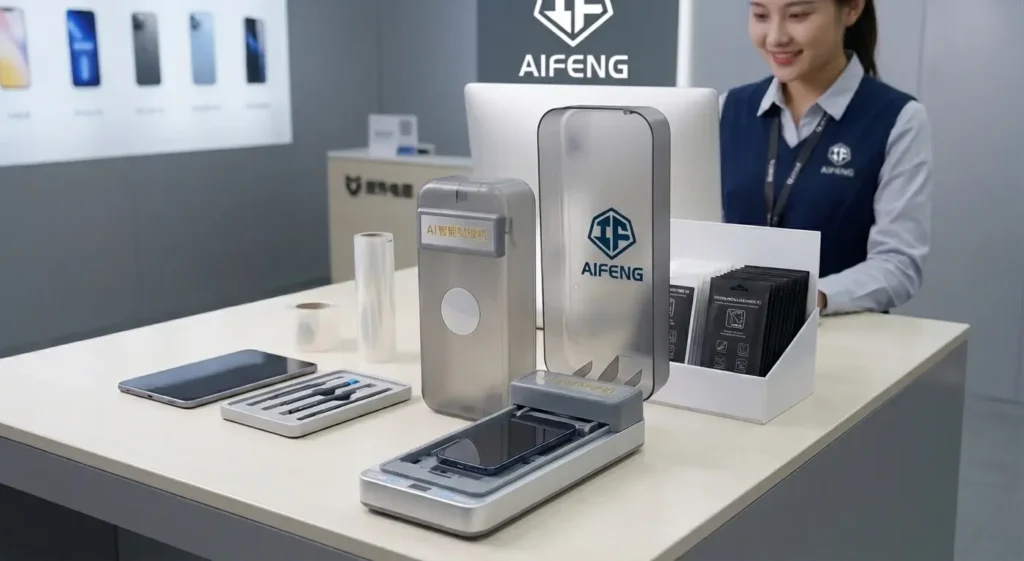
The initial evaluation step is determining where and how the screen protector machine will operate. Repair centers usually feature dedicated technical workbenches, whereas retail stores perform installations directly at front customer service counters. In both scenarios, a compact, automatic screen protector machine designed for desktop placement is ideal, taking up significantly less space than industrial laminating hardware.
Before placing an order, measure your counter space and review the following factors:
- Machine Footprint: Ensure the desktop screen protector applicator leaves ample space for device unloading, cleaning wipes, and daily counter activities.
- Power Requirements: Verify input voltage, connector type, and power adapter specifications against your local shop electricity standards.
- Operator Ergonomics: Position the control panels and loading bays where technicians can comfortably align devices without wrist strain.
- Accessory Storage: Reserve nearby space for phone repair tools, cleaning kits, and bulk screen protector inventory.
- Customer Counter Layout: Confirm that operating the machine does not obstruct POS payment terminals, repair check-in areas, or main display showcases.
2. Check Phone Model and Screen Protector Compatibility
Compatibility is a critical purchasing factor. Never assume a machine labeled as a “universal screen protector applicator” automatically supports every smartphone design or film substrate without proper verification. Modern smartphones feature diverse screen profiles, curved edges, camera cutouts, and varying glass thicknesses ranging from tempered glass to privacy films.
Request clarification from your equipment supplier across three areas:
- Supported Phone Models: Obtain a updated compatibility list covering popular devices (such as the latest iPhone and Samsung Galaxy series). Test high-volume models first.
- Film & Glass Compatibility: Confirm whether the applicator handles tempered glass, flexible TPU, privacy filters, or anti-glare screen protectors without altering roller pressure.
- Positioning Fixtures: Evaluate how the machine clamps and aligns different phone profiles, and whether custom jigs or universal alignment molds are required when switching models.
If your repair center serves niche device markets, request custom sample testing from the supplier before committing to a bulk purchase order.
3. Understand the Installation Workflow
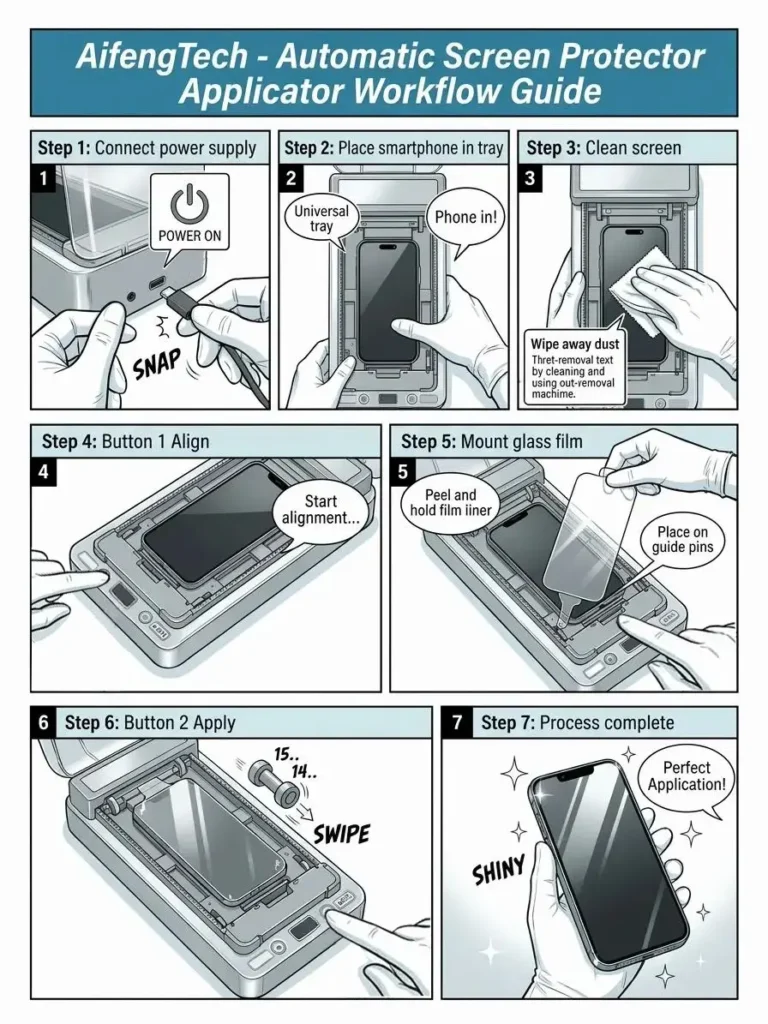
A high-performance automatic screen protector applicator machine should feature an intuitive, easy-to-teach operating workflow. Before finalizing your equipment selection, request a complete live or video demonstration illustrating operator steps alongside automated machine actions.
A standardized automatic installation workflow typically follows:
- Device Inspection: Remove any existing broken screen protector and inspect the display glass for deep structural cracks.
- Display Cleaning: Wipe away fingerprints, oils, and airborne dust particles using lint-free microfiber wipes and alcohol pads.
- Protector Selection: Select the precise screen protector specification matching the customer’s phone model.
- Loading & Alignment: Secure the phone and protective film into the machine’s universal positioning tray.
- Automated Application: Initiate the automatic roller or vacuum lamination sequence via the single-touch control panel.
- Final Quality Check: Inspect edge adhesion, bubble elimination, and dust clearance before returning the device to the customer.
Review whether the supplier offers operational video tutorials, step-by-step user manuals, and fast troubleshooting guides to assist in onboarding new technicians across shifts.
4. Evaluate Speed Without Ignoring Installation Quality
While rapid application cycle times help busy repair shops handle high foot traffic, advertised machine speeds should not be confused with total service time. The end-to-end customer wait time includes manual cleaning, positioning, protector unboxing, and post-installation inspection.
When evaluating supplier speed claims:
- Clarify Cycle Measurement: Confirm whether a “15-second installation” claim covers only the mechanical pass of the roller or includes setup and unloading.
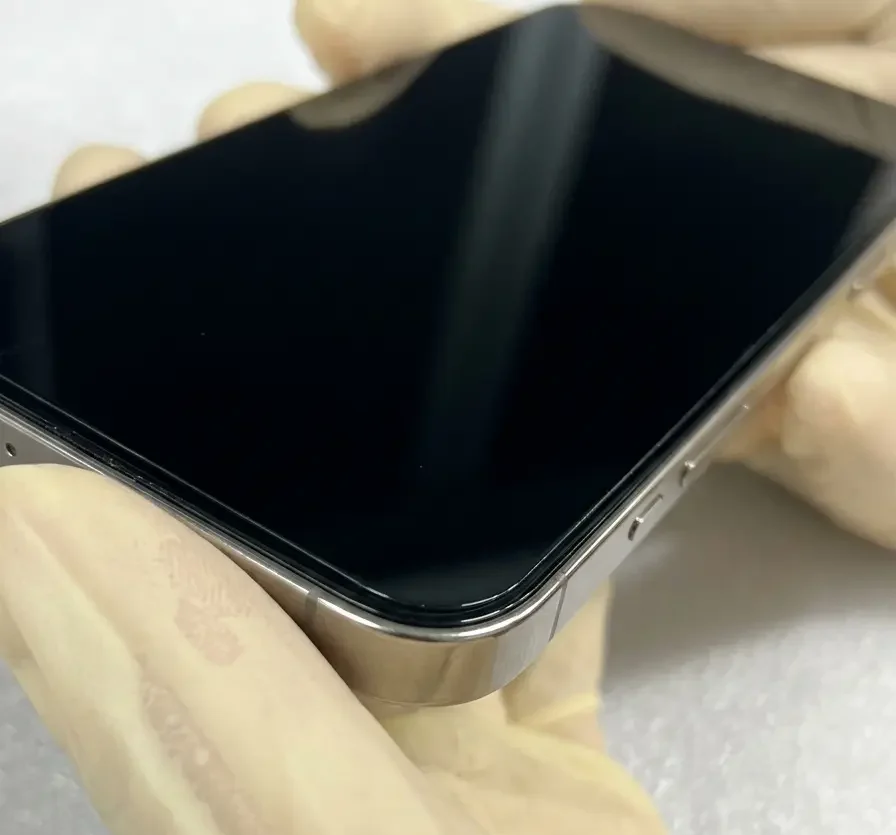
- Prioritize First-Pass Yield: A machine that takes 30 seconds but yields a 100% bubble-free result is far more profitable than a 10-second machine that frequently requires film remounting due to misalignment.
- Evaluate Repeatability: Choose equipment that maintains uniform pressure distribution across thousands of cycles to eliminate human application errors.
5. Review Power Requirements and Daily Maintenance
Smooth daily shop operations depend on electrical reliability and simple maintenance routines. Verify the exact machine voltage (110V/220V), amperage, and plug adapter standards for your region. Do not assume USB Type-C power ports automatically support low-wattage wall adapters without checking manufacturer documentation.
Preventative maintenance ensures consistent installation quality over extended commercial use.
Ask your equipment manufacturer:
- Cleaning Protocols: Which roller assemblies and positioning trays require daily dust removal?
- Consumable Components: Are there silicone pads, alignment pins, or pressure rollers that require periodic replacement?
- Troubleshooting Steps: What calibrating steps should an operator take if film alignment drifts over time?
- In-House vs. Technical Repairs: Which maintenance tasks can shop staff complete independently without voiding equipment warranties?
6. Compare Supplier Support, Warranty and Spare Parts
Purchasing an automatic screen protector machine is an investment in your long-term service infrastructure. Factory support becomes vital when equipment runs continuously in retail settings.
Before committing to a order, evaluate supplier credentials:
- Warranty Terms: Confirm coverage duration for motorized drives, internal sensors, and mechanical structures.
- Spare Parts Availability: Ensure replacement rollers, alignment jigs, and power supplies are readily stocked for fast dispatch.
- Technical Support Channels: Check if the supplier provides direct engineering contact via WhatsApp, WeChat, or video calls for immediate troubleshooting.
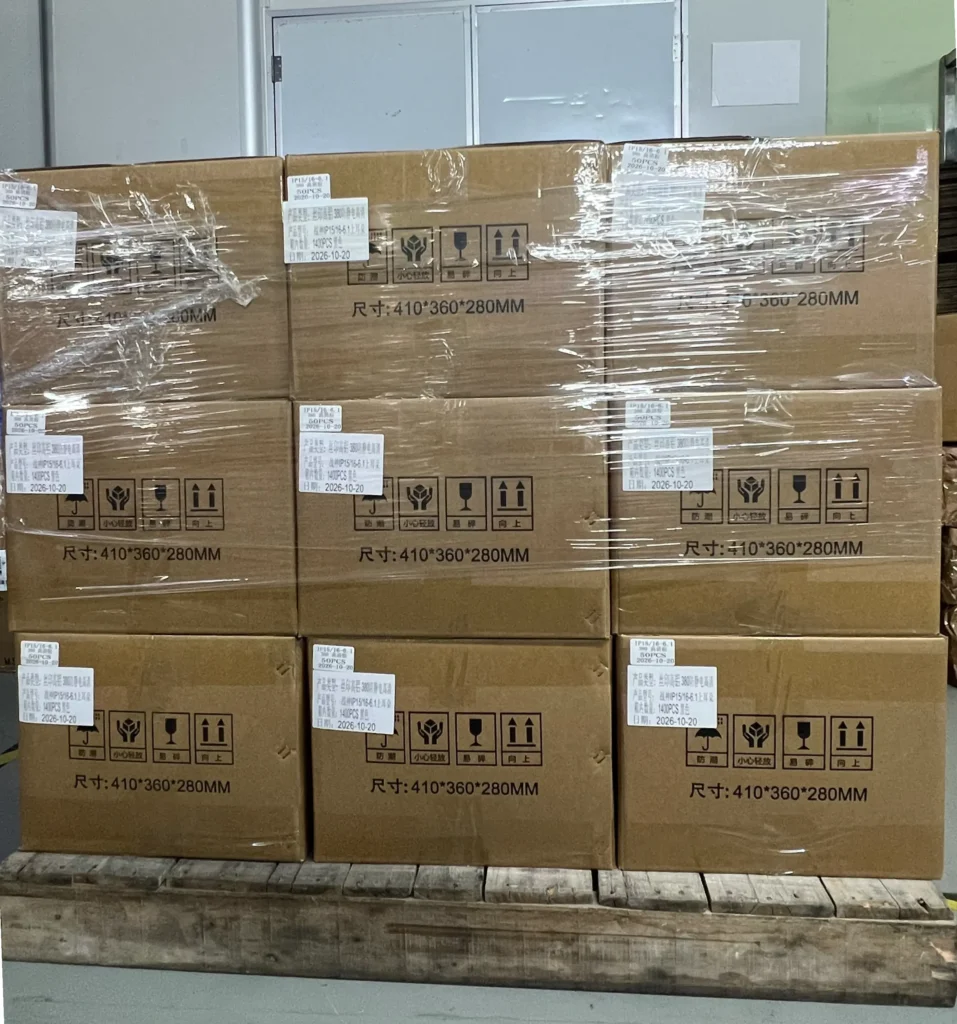
- B2B & Wholesale Options: For regional distributors, confirm minimum order quantities (MOQ), lead times, OEM branding customization, and private-label packaging support.
Conclusion & Factory Partnership
Selecting the ideal desktop automatic screen protector applicator machine requires balancing shop space, phone model support, operational workflow, and reliable after-sales backup. Investing in a precision-engineered automatic applicator ensures consistent 99% bubble-free installations, reduces customer wait times, and maximizes accessory profitability.
As a specialized screen protector applicator machine manufacturer in China, AifengTech supplies compact, high-precision automatic applicators and dust-free screen protector kits tailored for global repair centers, retail chains, and OEM brand owners.
Frequently Asked Questions (FAQ)
Q: Is a desktop automatic screen protector applicator machine suitable for a small phone repair shop?
A: Yes. Compact desktop machines occupy minimal counter space, simplify employee training, and deliver uniform, bubble-free results that boost customer satisfaction.
Q: Can one universal screen protector machine work with every smartphone model?
A: Universal applicators use adjustable positioning trays and flexible alignment jigs to accommodate most flat and 2.5D screen smartphones. However, extreme curved edges or non-standard device shapes should be pre-tested with the factory.
Q: Does an automatic screen protector machine guarantee 100% bubble-free results?
A: Automatic machines remove human application errors during lamination. However, thorough pre-installation cleaning to remove airborne dust remains critical for achieving flawless, bubble-free adhesion.
Related Screen Protection & Machinery Solutions
To build a complete accessory and equipment matrix for your repair network or distribution business, explore our specialized product categories:
Automated Applicator Equipment: Learn more about our flagship Automatic Screen Protector Machine for repair shops.
Precision Applicator Kits: Explore our easy-install Screen Protector Applicator Kit series for retail accessory sales.
Large-Format Display Protection: View our Acrylic TV Screen Protector Panel for enterprise screens.
Computer Privacy Screens: Discover tool-free privacy options via our Acrylic Hanging Privacy Screen Filter collection.
Factory Manufacturing Strength: Learn how our 100% full inspection supports global clients in our Reliable OEM Screen Protector Manufacturer overview.
Bulk Tempered Glass Inventory: Review core wholesale glass options via the Tempered Glass Category.
Ready to Upgrade Your Shop’s Screen Protection Workflow?
Looking for direct factory-direct wholesale pricing, OEM branding options, or sample testing for your repair shop network? Get in touch with our sales team directly via WhatsApp or Email for immediate technical support and fast inquiries.
📱 WhatsApp: https://wa.me/8618773088973
📧 Email: mazan@ai-feng.com
🌐 Official Website Inquiry: Submit a Custom Inquiry on AifengTech

